Some new /0r1g1n@l b00k

Pacific Ink
Сообщения: 104
Зарегистрирован: Вс янв 11, 2009 6:59 pm

Some new /0r1g1n@l b00k

Сообщение Pacific Ink » Сб июл 25, 2009 6:47 am

Изображение

Product Description

Gain an understanding of the latest advances in spectroscopy with the text that has set the unrivaled standard for more than 30 years: Pavia/Lampman/Kriz/Vyvyan's INTRODUCTION TO SPECTROSCOPY, 4e. This comprehensive resource provides an unmatched systematic introduction to spectra and basic theoretical concepts in spectroscopic methods that create a practical learning resource whether you're an introductory student or someone who needs a reliable reference text on spectroscopy. This well-rounded introduction features updated spectra; a modernized presentation of one-dimensional nuclear magnetic resonance (NMR) spectroscopy; the introduction of biological molecules in mass spectrometry; and inclusion of modern techniques alongside DEPT, COSY, and HECTOR. Count on this book's exceptional presentation to provide the comprehensive coverage you need to understand today's spectroscopic techniques.

Product Details

* Paperback: 656 pages
* Publisher: Brooks Cole; 4 edition (March 12, 2008)
* Language: English
* ISBN-10: 0495114782
* ISBN-13: 978-0495114789

Download: high quality book, unrar password: www.chem4all.vn

Код: Выделить всё

[url]http://rapidshare.com/files/259740658/IS.pdf.__a[/url]
Use FSJ program (File Splitter & Joiner) to unrar, do not use WinRAR
Изображение

Classics in Stereoselective Synthesis
Erick M. Carreira, Lisbet Kvaerno
ISBN: 978-3-527-32452-1
Hardcover
651 pages
February 2009

This book provides a noteworthy compilation of the groundbreaking methods of stereoselective synthesis, belonging to the repertoire of every modern practitioner of synthetic organic chemistry. The general principles underlying these processes are highlighted as they form the basis for the rapid and continuing developments in the field. The work also features illustrative examples of drug and natural product syntheses, resulting in a rich source of stimulating ideas for the efficient use of asymmetric reactions in the construction of stereochemically complex structures.


MACROCYCLIC STEREOCONTROL

Introduction
Background
Conformational Control in Medium-Sized Rings
Asymmetric Synthesis with Medium-Sized Rings
Case Studies in Natural Products Total Synthesis
Macrocyclic Stereocontrol in Cyclic Peptides
Appendix: Macrocycle Formation

CARBONYL ADITION REACTIONS

Introduction
Non-Chelated 1,2-Asymmetric Induction and the Operation of Steric and Electronic Effects
1,2-Asymmetric Induction Predicated on Chelation Control
1,3-Asymmetric Induction from CBeta Stereogenic Centers
Asymmetric Induction by Remote Stereocenters (Beyond 1,3-Induction)
Catalytic Enantioselective Carbonyl Additions of Arganozinc Species
Enantioselective Ketone Reduction
Enzymatic Reduction of Ketones
Enantioselective Formation of Cyanohydrins
Enantioselective Alkyne Additions
Asymmetric Carbonyl-Ene Reactions

ALPHA-FUNCTIONALIZATIONS OF ENOLATES

Introduction
Diastereoselective Alpha-Alkylations of Chiral Enolates
Heteroatom-Substituted Enolates
Asymmetric Enolate Alkylations Using Chiral Auxiliaries
Enantioselective Enolate Alkylations
Alpha-Hydroxylations of Enolates
Alpha-Halogenations of Enolates

ALDOL REACTIONS

Introduction
Chiral Enolates Through the Use of Chiral Auxiliaries or Chiral Controller Groups
Substrate Control with Chiral Carbonyl Compounds
Catalytic Enantioselective Aldol Reactions

ALLYLATIONS OF C=O BONDS

Introduction
Reactivity of Allylmetal Reagents
Boronate Additions
Enantioselective Additions of Optically Active Allylic Boron Reagents
Diastereoselecive Allylations with Chiral Boron Reagents
Mechanistic Aspects ? Lewis Acid-Promoted Addition of Allylsilanes and Allylstannanes to Aldehydes
Chelation Control in the Allylation of Alpha- and Beta-Alkoxy Aldehydes
Allylchromium Reagents
Diastereoselective Allylations with Chiral Silanes and Stannanes
Catalytic Asymmetric Allylations

CHIRAL ACETALS

Introduction
Diastereoselective Reactions of Chiral Acetals
Glycosylations
Spiroketals in Natural Product Synthesis

ALKENE HYDROBORATION

Introduction
Hydroborations with Acyclic Stereocontrol
Metal-Catalyzed Hydroborations
Asymmetric Hydroborations with Chiral Boranes
Catalytic Asymmetric Hydroboration, Hydrosilylation, and Hydroalumination

REDUCTIONS OF OLEFINS

Introduction
Diastereoselective Olefin Reductions by Catalytic Hydrogenation
Alternative Methods for Diastereoselective Olefin Reductions
Catalytic Asymmetric Olefin Hydrogenations

OXIDATIONS OF OLEFINS

Introduction
Diastereoselective Epoxidations
Enantioselective Epoxidations
Asymmetric Ring-Opening of Epoxides
Synthesis of Aziridines
Iodolactonizations and Other Olefin Cyclizations Induced by Electrophiles
Diastereoselective Dihydroxylations of Olefins
Enantioselective Dihydroxylations of Olefins
Enantioselective Aminohydroxylation of Olefins

AMINO ACIDS

Introduction
Enantioselective Hydrogenations of Alpha, Beta-Didehydroamino Acids
Enolate Alkylations in the Presence of Chiral Auxiliaries
Alkylation of Glycine Anion Equivalents in the Presence of Chiral Phase-Transfer Catalysts
Enolate Aminations
Enzymatic Syntheses of Alpha-Amino Acids
Catalytic Asymmetric Strecker Reactions

ADDITIONS TO C=N BONDS

Introduction
Substrate-Controlled Diastereoselective Additions to C=N Bonds
Additions to Imine Derivatives Bearing N-Bound Auxiliaries
Formation of Beta-Lactams Through Staudinger Reactions
Intramolecular Diastereoselective Iminium Ion Cyclizations
Pictet-Spengler Reactions
Catalytic Asymmetric Reductions of Imines and Imine Derivatives
Catalytic Enantioselective Mannich and Mannich-Type Reactions
Enantioselective Additions of Carbon Nucleophiles to C=N Bonds

CONJUGATE ADDITIONS

Introduction
Diastereoselective Conjugate Additions
Diastereoselective Conjugate Additions with Use of Chiral Auxiliaries
Enantioselective Conjugate Additions of Enolates and other Stabilized Carbon Nucleophiles
Enantioselective Conjugate Additions of Organometallic Species
Enantioselective Conjugate Additions of Radicals
Enantioselective Conjugate Additions of Heteroatom Nucleophiles
Conjugate Reductions
Catalytic Enantioselective Stetter Reactions

CHIRAL CARBONIONS

Introduction
Organolithium Reagents by Transmetalation of Organostannanes
Carbanions by Reductive Methods
Chiral Carbanions by Deprotonation
Sulfoxide- and Phosphorus-Stabilized Carbanions
Metal-Mediated Enantioselective Olefin Functionalizations

METAL-CATALYZED ALLYLATIONS

Introduction
Diastereoselective Palladium-Catalyzed Allylation Reactions
Enantioselective Palladium-Catalyzed Allylation Reactions
Iridium-Catalyzed Enantioselective Allylation Reactions
Copper-Catalyzed SN2? Allylation Reactions
Enantioselective Allylation Reactions Catalyzed by Other Transition Metals
Asymmetric Ring-Opening Reactions of Unsaturated Heterocycles

CYCLOPROPANATIONS AND C-H INSERTION REACTIONS

Introduction
Diastereoselective Cyclopropanations with Carbenoids Generated from Diazoalkanes
Enantioselective Dyclopropanations with Carbenoids Generated from Diazoalkanes
Diastereoselective Simmons-Smith Cyclopropanations
Enantioselective Simmons-Smith Cyclopropanations
Alternative Classes Cyclopropanations
Diastereoselective C-H Bonds

SIGMATROPIC REARRANGEMENTS

Introduction
Claisen and Claisen-Type [3,3]-Sigmatropic Rearrangements
Cope and Cope-Type [3,3]-Sigmatropic Rearrangements
[2,3]-Sigmatropic Rearrangements
Ene Reactions
Nazarov Cyclizations

DIELS-ALDER AND HETERO-DIELS-ALDER REACTIONS

Introduction
Diastereoselective Intermolecular Diels-Alder Reactions
Diastereoselective Intramolecular Diels-Alder Reactions
Diastereoselective Diels-Alder Reactions Using Chiral Auxiliaries
Catalytic Enantioselective Diels-Alder Reactions
Diastereoselective Hetero-Diels-Alder Reactions
Enantioselective Hetero-Diels-Alder Reactions

[3+2]- AND [2+2]-CYCLOADDITION REACTIONS

Introduction
Substrate-Controlled Diastereoselective [1,3]-Dipolar Cycloadditions
Diastereoselective [1,3]-Dipolar Cycloadditions Using Chiral Auxiliaries
Catalytic Enantioselective [1,3]-Dipolar Cycloadditions
[3+2]-Cycloadditions with Trimethylenemethane Equivalents
Ketene Cycloadditions
Photochemical [2+2]-Cycloadditions

Download: unrar password www.chem4all.vn

Код: Выделить всё

[url]http://rapidshare.com/files/259474547/Classics.rar[/url]
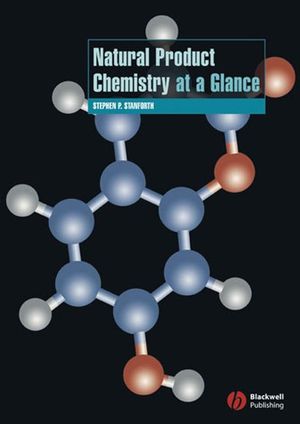
Изображение


Natural Product Chemistry at a Glance
Stephen P. Stanforth
ISBN: 978-1-4051-4562-6
Paperback
152 pages
August 2006, Wiley-Blackwell

Natural products have been a fertile area of chemical investigation for many years, driving the development of both analytical chemistry and of new synthetic reactions and methodologies. Many of the most important synthetic reactions in chemistry have been developed in the quest to characterise and synthesise these materials.

Natural Product Chemistry at a Glance provides a concise overview of the main principles and reactions of natural product chemistry, for students studying chemistry and related courses at undergraduate level. Based on the highly successful and student friendly “at a glance” approach, the material developed in this book has been chosen to reinforce the principles of elementary organic reactions and to highlight the similarity between many organic reactions and biological processes. It will also serve as an initial platform for more advanced excursions into the origin of natural products.

Students using Natural Product Chemistry at a Glance will find they have a resource with which they can quickly, economically and confidently acquire, regularly review and revise the basic facts that underpin the biosynthesis and chemistry of natural products.

Section 1: Introduction.

1.1 Primary and Secondary Metabolites.

1.2 Properties and Purpose of Secondary Metabolites.

Section 2: Acetyl Coenzyme A: A Key Biological Intermediate.

2.1 What is Acetyl Coenzyme A? 8.

2.2 Comparison of Organic and Acetyl Coenzyme A Reactions.

2.3 Malonyl Coenzyme A – A Partnership with Acetyl Coenzyme A.

2.4 How is Acetyl Coenzyme A Used in Biosynthesis?.

Section 3: Biosynthesis of Fatty Acids.

3.1 What are Fatty Acids?.

3.2 Occurrence and Function of Fatty Acids.

3.3 Biosynthesis of Saturated Straight-Chain Fatty Acids.

3.4 Biosynthesis of Saturated Branched Fatty Acids.

3.5 Mono-unsaturated Fatty Acids.

3.6 Poly-unsaturated Fatty Acid.

3.7 Oxygenated Fatty Acids.

3.8 β-Oxidation.

Section 4: Biosynthesis of Polyketides.

4.1 What are Polyketides?.

4.2 The Chemistry of 1,3-Dicarbonyls: Keto–Enol Tautomerism.

4.3 The Chemistry of 1,3-Dicarbonyls: Condensation Reactions.

4.4 Polyketide Cyclizations: Formation of Unsaturated Products.

4.5 Secondary Structural Modifications During Polyketide Cyclizations.

4.5.1 Alkylation.

4.5.2 Reduction.

4.5.3 Oxidation.

4.5.4 Decarboxylation.

4.5.5 Modifications to the Carbon Skeleton.

4.6 Alkaloids Derived from Polyketides.

4.7 The Use of Isotopes in the Elucidation of Biosynthetic Pathways.

Section 5: The Shikimic Acid Pathway.

5.1 Introduction.

5.2 Transamination.

5.3 Biosynthesis of Natural Products Derived from Cinnamic Acid.

5.4 Lignans.

5.5 Biosynthesis of Alkaloids.

5.5.1 Decarboxylation of Amino Acids and α-Keto Acids.

5.5.2 Pictet–Spengler Reaction.

5.5.3 Alkaloids Derived from Tryptophan.

5.5.4 Alkaloids Derived from Tyrosine.

Section 6: Terpenes.

6.1 What are Terpenes?.

6.2 Carbocations as Intermediates in Terpene Biosynthesis.

6.2.1 Hydride Shifts.

6.2.2 Alkyl Shifts.

6.2.3 Cyclizations.

6.3 Termination of Carbocations.

6.3.1 Loss of a Proton.

6.3.2 Addition of Water.

6.4 Terpene Biosynthesis.

6.4.1 Biosynthesis Initiated by Heterolysis of Pyrophosphates.

6.4.2 Biosynthesis from ‘Dimers’ of Pyrophosphates.

6.4.3 Biosynthesis Initiated by Protonation or Epoxidation of an Alkene.

Section 7: Natural Products Derived from Amino Acids.

7.1 Alkaloids.

7.2 Penicillins and Related Compounds 1.1 Primary and Secondary Metabolites.

7.3 Macrocyclic Peptides.

7.4 Porphyrins.

Section 8: Answers to Problems.

Section 9: Further Reading.

Index

Download: unrar password: www.chem4all.vn

Код: Выделить всё

http://rapidshare.com/files/259478006/Natural.rar

Аватара пользователя
Vittorio
Сообщения: 14670
Зарегистрирован: Вс мар 25, 2007 2:33 am

Re: Some new /0r1g1n@l b00k

Сообщение Vittorio » Сб июл 25, 2009 10:52 am

thanks! you're amazing! :D :up:

Pacific Ink
Сообщения: 104
Зарегистрирован: Вс янв 11, 2009 6:59 pm

Re: Some new /0r1g1n@l b00k

Сообщение Pacific Ink » Сб июл 25, 2009 11:24 am

Изображение


Heterocyclic Chemistry at a Glance
John A. Joule, Keith Mills
ISBN: 978-1-4051-3918-2
Paperback
160 pages
April 2007, Wiley-Blackwell

An understanding of the chemistry of heterocycles is essential in the study and application of organic chemistry, as well as being a central part of the increasingly popular medicinal and pharmaceutical chemistry degree courses.

Heterocyclic Chemistry at a Glance provides a concise overview of the main principles and reactions of heterocyclic chemistry, for students studying chemistry and related courses at undergraduate level. Based on the highly successful and student friendly “at a glance” approach, the material developed in this book has been chosen to help the student grasp the essence of heterocyclic chemistry, ensuring that they can confidently use that knowledge when required.

Students wanting an accessible overview of heterocyclic chemistry will find this book an ideal source of the information they require. In addition the structure of the book, which facilitates the rapid assimilation, understanding and recall of critical concepts, facts and definitions, will provide an invaluable aid to revision for students preparing for examinations.

1. Heterocyclic Nomenclature.

2. Structures of Heteroaromatic Compounds.

3. Common reaction types in heterocyclic chemistry.

4. Pyridines.

5. Quinolines and Isoquinolines.

6. Diazines.

7. Pyryliums and benzopyryliums.

8. Pyrroles.

9. Indoles.

10. Furans and Thiophenes.

11. 1,3-Azoles and 1,2-azoles.

12. Purines.

13. Heterocycles with more than two hetero-atoms (higher azoles) (higher azines).

14. Heterocycles with ring-junction nitrogen (bridgehead nitrogen).

15. Non-aromatic heterocycles.

16. Palladium in Heterocyclic Chemistry.

17. Heterocycles in Biochemistry.

18. Heterocycles in Medicine

http://books.google.com.vn/books?id=8f0 ... t&resnum=3

Download:

Single PDF, Unrar password: www.chem4all.vn

Код: Выделить всё

http://rapidshare.com/files/259800732/heterocyclic.rar

Аватара пользователя
vitaki
Сообщения: 2251
Зарегистрирован: Вт авг 19, 2008 6:19 pm

Re: Some new /0r1g1n@l b00k

Сообщение vitaki » Сб июл 25, 2009 5:52 pm

Большое спасибо за ссылки :up:
…Порядочный химик в двадцать раз полезнее всякого поэта. / И. С. Тургенев.

Аватара пользователя
mlkost
Сообщения: 1204
Зарегистрирован: Пн дек 22, 2008 3:28 pm

Re: Some new /0r1g1n@l b00k

Сообщение mlkost » Вс июл 26, 2009 7:49 am

Pacific Ink, thanks!
:up: :up: :up:

Pacific Ink
Сообщения: 104
Зарегистрирован: Вс янв 11, 2009 6:59 pm

Re: Some new /0r1g1n@l b00k

Сообщение Pacific Ink » Пн июл 27, 2009 3:07 pm

Изображение

Product Details

* Hardcover: 617 pages
* Publisher: Academic Press; 2 edition (January 26, 2004)
* Language: English
* ISBN-10: 0126437327
* ISBN-13: 978-0126437324

Read online at: http://books.google.com.vn/books?id=XwD ... ks_s&cad=1

Download:

Unrar password: www.chem4all.vn

Код: Выделить всё

http://rapidshare.com/files/260576039/TOCDDDA2nd.rar
Последний раз редактировалось Pacific Ink Пн июл 27, 2009 3:11 pm, всего редактировалось 1 раз.

Pacific Ink
Сообщения: 104
Зарегистрирован: Вс янв 11, 2009 6:59 pm

Re: Some new /0r1g1n@l b00k

Сообщение Pacific Ink » Пн июл 27, 2009 3:10 pm

Review of Organic Functional Groups: Introduction to Medicinal Organic Chemistry

Изображение

Product Description

Univ. of Houston, TX. Identifies the functional groups common to organic chemistry and reviews general topics of nomenclature, physical and chemical properties, and metabolism. Provides background material for pharmacy courses in medicinal chemistry. Included CD-ROM provides chapter review questions. Previous edition: c1992. Softcover. DNLM: Chemistry, Organic.

Product Details

* Paperback: 160 pages
* Publisher: Lippincott Williams & Wilkins; Fourth Edition edition (September 1, 2003)
* Language: English
* ISBN-10: 0781743818
* ISBN-13: 978-0781743815

Read online at: http://books.google.com.vn/books?id=a3L ... t&resnum=4

Download:

Unrar password: www.chem4all.vn

Код: Выделить всё

http://rapidshare.com/files/260574973/Review.rar

Аватара пользователя
LEDI
Сообщения: 881
Зарегистрирован: Чт мар 26, 2009 10:54 pm

Re: Some new /0r1g1n@l b00k

Сообщение LEDI » Пн июл 27, 2009 3:30 pm

Спасибо, Pacific Ink! :clap:
Химики - это те, кто на самом деле знают, как устроен мир (Л. Полинг)

Pacific Ink
Сообщения: 104
Зарегистрирован: Вс янв 11, 2009 6:59 pm

Re: Some new /0r1g1n@l b00k

Сообщение Pacific Ink » Пн июл 27, 2009 5:19 pm

Изображение

ISBN: 3-906390-26-8
Hardcover
388 pages
August 2002

Description

An estimated half of all drug molecules used in medicine are administered as salts, and the formation and the selection of a suitable salt for a drug candidate is recognized as an essential step in the preclinical phase of modern drug development. Surprisingly, however, the scientific literature on this topic is rather limited and scattered throughout numerous journals and patents. The majority of medicinal chemists in pharmaceutical industry whose primary focus is the design and synthesis of novel compounds as future drug entities are organic chemists for whom salt formation is often a marginal activity restricted to the short-term objective of obtaining crystalline material. Because a comprehensive resource that addresses the preparation, selection, and use of pharmaceutically active salts has not been available, researchers may forego the opportunities for increased efficacy and improved drug delivery provided by selection of an optimal salt. To fill this gap in the pharmaceutical bibliography, we have gathered an international team of seventeen authors from academia and pharmaceutical industry who, in their contributions to this volume, present the necessary theoretical foundations as well as a wealth of detailed practical experience in the choice of pharmaceutically active salts.
An introductory chapter presents a concise review of the various objectives in the pursuit of pharmaceutically active salts, followed by contributions that present the theoretical background of salt formation: dissociation and ionic equilibria, solubility and dissolution (Chapters 1 and 2), evaluation of solid-state properties (Chapter 3), and safety, biopharmaceutical, and pharmaceutical-technological aspects (Chapters 4 and 5). In Chapters 6, 7, and 8, the practice of salt formation in an industrial research-and-development environment is described, including salt-selection strategies, aspects of large-scale industrial salt production, and the significance of salt formation in industrial processing. Regulatory and patent issues are addressed in Chapters 9 and 10, and Chapter 11 provides practical examples of preparation of salts for the practitioners at the lab bench. The book concludes with a comprehensive annotated compilation of the individual salt-forming acids and bases with their relevant properties (Chapter 12), followed by an Appendix containing tables with the acids and bases sorted alphabetically and by pKa, supplemented with other useful facts and data.
The editors have taken care to address every conceivable aspect of the preparation of pharmaceutical salts. Altogether, the contributions reflect the multidisciplinary nature of the science involved in selection of suitable salt forms for new drug products. This book is destined to be an essential reference resource for students of medicinal and pharmaceutical chemistry, and an indispensable handbook for research-and-development chemists, analytical chemists, biologists, development pharmacists, regulatory and patent specialists, and medicinal scientists engaged in preclinical development of drugs. This comprehensive up-to-date guide and information source will be an instructive companion for all scientists involved in research and development of drugs and, in particular, of pharmaceutical dosage forms.

Index

1. Introduction (Camille G. Wermuth and P. Heinrich Stahl).
2. The Physicochemical Background: Fundamentals of Ionic Equilibria (Michael B. Maurin, et al.).
3. Solubility and Dissolution of Weak Acids, Bases, and Salts (Madhu Pudipeddi, et al.).
4. Evaluation of Solid-State Properties of Salts (Danielle Giron and David J. W. Grant).
5. Pharmaceutical Aspects of the Drug Salt Form (P. Heinrich Stahl and Masahiro Nakano).
6. Biological Effects of the Drug Salt Form (Friedlieb Pfannkuch, et al.).
7. Salt-Selection Strategies (Abu T. M. Serajuddin and Madhu Pudipeddi).
8. A Procedure for Salt Selection and Optimization (Michael J. Bowker).
9. Large-Scale Aspects of Salt Formation: Processing of Intermediates and Final Products (Stanley Lee and Christian Hoff).
10. Patent Aspects of Drug Salt Formation (Hans-Günther Foraita.
11. Regulatory Aspects of Drug Salts (Henning Asche, et al.).
12. Selected Procedures for the Preparation of Pharmaceutically Acceptable Salts (Camille G. Wermuth and P. Heinrich Stahl).
13. Monographs on Acids and Bases (P. Heinrich Stahl and Camille G. Wermuth).
14. Appendix (P. Heinrich Stahl).
15. Subject-Index.
16. Substance-Index.

Online reading: http://books.google.com.vn/books?id=NpG ... t&resnum=4

Download: Single PDF, unrar pass: http://www.chem4all.vn

Код: Выделить всё

http://rapidshare.com/files/257817073/Handbook.rar
Последний раз редактировалось Pacific Ink Вт июл 28, 2009 9:47 am, всего редактировалось 1 раз.

Аватара пользователя
mercaptan
Сообщения: 2954
Зарегистрирован: Сб мар 29, 2008 8:42 pm

Re: Some new /0r1g1n@l b00k

Сообщение mercaptan » Пн июл 27, 2009 5:24 pm

Спасибо за книги!!
Кто разобрался с FSJ-прогой (File Splitter & Joiner) просьба перезалить INTRODUCTION TO SPECTROSCOPY в .rar или .7z архиве.
Some scientists claim that hydrogen, because it is so plentiful, is the basic building block of the universe. I dispute that. I say that stupidity is far more abundant than hydrogen, and THAT is the basic building block of the universe.
-- Frank Zappa

Pacific Ink
Сообщения: 104
Зарегистрирован: Вс янв 11, 2009 6:59 pm

Re: Some new /0r1g1n@l b00k

Сообщение Pacific Ink » Вт июл 28, 2009 10:00 am

mercaptan писал(а):Спасибо за книги!!
Кто разобрался с FSJ-прогой (File Splitter & Joiner) просьба перезалить INTRODUCTION TO SPECTROSCOPY в .rar или .7z архиве.
Dear friend, here is rar file: unrar password: www.chem4all.vn

Код: Выделить всё

http://rapidshare.com/files/260887047/IS.rar

Аватара пользователя
mercaptan
Сообщения: 2954
Зарегистрирован: Сб мар 29, 2008 8:42 pm

Re: Some new /0r1g1n@l b00k

Сообщение mercaptan » Вт июл 28, 2009 1:44 pm

Pacific Ink писал(а):
mercaptan писал(а):Спасибо за книги!!
Кто разобрался с FSJ-прогой (File Splitter & Joiner) просьба перезалить INTRODUCTION TO SPECTROSCOPY в .rar или .7z архиве.
Dear friend, here is rar file: unrar password: www.chem4all.vn

Код: Выделить всё

http://rapidshare.com/files/260887047/IS.rar
Thanks a lot!
:beer:
Some scientists claim that hydrogen, because it is so plentiful, is the basic building block of the universe. I dispute that. I say that stupidity is far more abundant than hydrogen, and THAT is the basic building block of the universe.
-- Frank Zappa

Pacific Ink
Сообщения: 104
Зарегистрирован: Вс янв 11, 2009 6:59 pm

Re: Some new /0r1g1n@l b00k

Сообщение Pacific Ink » Пн авг 03, 2009 2:26 pm

Protecting Groups

Author: Philip J. Kocienski[/B]

Изображение

Hardcover, 680 Pages
3rd Edition, 2003
ISBN: 3-13-137003-3
Georg Thieme Verlag
ISBN: 1-58890-235-8
Georg Thieme Verlag (The Americas)

Description

This new edition of "Protecting Groups" by Philip Kocienski is a valuable addition to the synthetic chemist's bookshelf and will find an appreciative audience. It contains an enormous amount of valuable and highly organized information. It is beautifully and clearly written; a pleasure to read. The introductory chapter provides a sophisticated overview of the application of protecting groups in contemporary syntheses. At the heart of the book are seven chapters which deal authoritatively and thoroughly with the protection of the various core functional groups, from carbonyl to amino. The closing epilog rounds off the presentation with an insight into the realities of synthetic practice and twenty-five problems for people who love to understand chemistry.

Editorial Review

"Protecting Groups" by Philip Kocienski is one of the most successful books on this topic. The quality has improved substantially from the first to the third edition, making the present book comparable to the standard reference work, "Protective Groups in Organic Synthesis". Still, it is possible to differentiate between the two books, even as Kocienski makes reference to "Greene and Wuts" in his own forward.

The manner in which the two books approach the topic seems to this reviewer to be entirely different. Thus, "Protective Groups in Organic Synthesis" represents a comprehensive reference that can streamline a lengthy search, and enable the rapid selection of an appropriate protecting group from tables. By contrast, "Protecting Groups" is more of a textbook, as exemplified by its presentation of the mechanisms for cleavage of individual protecting groups. In addition, the Kocienski work also highlights unsuccessful attempts to introduce protecting groups. In this regard, there is greater instructional value in "Protecting Groups". As the author is aware, this approach is also more engaging for the reader. The book is seasoned with anecdotes that make it a pleasure to read. The author's masterly touch is also quite evident in the selection of examples. Each one is described in careful detail, in contrast to the rudimentary information offered in Green and Wuts.

It would be quite difficult to strike a balance between the styles of these two books. "Protecting Groups" is the better book for advanced and graduate level students who wish to learn organic synthesis tactics, while "Protective Groups in Organic Synthesis" is more suited to the rigors of everyday laboratory practice. Ideally, one would apply the fundamentals learned from the Kocienski book to individual cases culled from the much larger collection of different protecting groups found in Green and Wuts.

Anyone with an interest in protecting groups should look into "Protecting Groups" by Philip Kocienski. Better books are available for making rapid comparisons between individual protecting groups, but the interesting and instructive discussions of the well-chosen examples in Kocienski's monograph are of enormous value.

Contents

Chapter 1 Protecting Groups: An Overview
Chapter 2 Carbonyl Protecting Groups
Chapter 3 Diol Protecting Groups
Chapter 4 Hydroxyl Protecting Groups
Chapter 5 Thiol Protecting Groups
Chapter 6 Carboxyl Protecting Groups
Chapter 7 Phosphate Protecting Groups
Chapter 8 Amino Protecting Groups
Epilogue: Problems, Problems, Problems...

Unrar pass: www.chem4all.vn

Код: Выделить всё

http://rapidshare.com/files/263203685/PGFOC.rar

Аватара пользователя
Vittorio
Сообщения: 14670
Зарегистрирован: Вс мар 25, 2007 2:33 am

Re: Some new /0r1g1n@l b00k

Сообщение Vittorio » Пн авг 03, 2009 2:36 pm

Pacific Ink, you're amazing! Zachyod, atskiy Sotona!!! :up:

Аватара пользователя
LEDI
Сообщения: 881
Зарегистрирован: Чт мар 26, 2009 10:54 pm

Re: Some new /0r1g1n@l b00k

Сообщение LEDI » Пн авг 03, 2009 4:44 pm

Thank you, Pacific Ink! :up:
Химики - это те, кто на самом деле знают, как устроен мир (Л. Полинг)

Аватара пользователя
OrganicChemist
Сообщения: 2213
Зарегистрирован: Вс июл 20, 2008 4:48 pm

Re: Some new /0r1g1n@l b00k

Сообщение OrganicChemist » Пн авг 03, 2009 5:15 pm

Thank you !!!
Рыба ищет где глубже, а человек - где больше платят...

Аватара пользователя
Выбегалло
Сообщения: 7998
Зарегистрирован: Ср авг 05, 2009 1:37 am

Re: Some new /0r1g1n@l b00k

Сообщение Выбегалло » Чт авг 06, 2009 11:39 pm

Thank you, Pacific Ink, for nice books!
У нас есть ТАКИЕ приборы! Но мы вам о них не расскажем.

Pacific Ink
Сообщения: 104
Зарегистрирован: Вс янв 11, 2009 6:59 pm

Re: Some new /0r1g1n@l b00k

Сообщение Pacific Ink » Ср авг 26, 2009 8:47 am

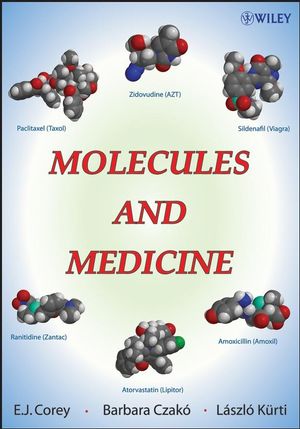
Molecules and Medicine
By E. J. Corey, László Kürti, Barbara Czakó

Изображение

* Publisher: Wiley
* Number Of Pages: 272
* Publication Date: 2007-08-31
* ISBN-10 / ASIN: 0470227494
* ISBN-13 / EAN: 9780470227497

Product Description:

Molecules and Medicine provides, for the first time ever, a completely integrated look at chemistry, biology, drug discovery, and medicine. It delves into the discovery, application, and mode of action of more than one hundred of the most significant molecules in use in modern medicine. Opening sections of the book provide a unique, clear, and concise introduction, which enables readers to understand chemical formulas.

PART I. INTRODUCTION.

UNDERSTANDING STRUCTURAL DIAGRAMS OF ORGANIC MOLECULES.
SOME COMMON MOLECULES.
PROTEINS AND THREE-DIMENSIONAL PROTEIN STRUCTURE.
SOME OF THE PROTEIN STRUCTURES THAT APPEAR IN THIS BOOK.
PART II. INFLAMMATORY, CARDIOVASCULAR AND METABOLIC DISEASES.
ANTI-INFLAMMATORY AGENTS.
Acetylsalicylic acid Aspirin™).
Naproxen (Aleve™).
How Do Anti-Inflammatory Drugs Work?
Other Eicosanoids in Inflammation.
An Overview of Inflammation.
Celecoxib (Celebrex™).
Prednisone (Deltasone™).
Methotrexate (Trexall™).
Allopurinol (Zyloprim™).

ANTIASTHMATIC AND ANTIALLERGIC AGENTS.
Salmeterol (Serevent™).
Fluticasone Propionate (Flovent™).
Montelukast Sodium (Singulair™).
Tiotropium Bromide (Spiriva™).
Lortadine (Claritin™).
TYPE 2 DIABETES.
An Overview of Metabolic Syndrome.
ANTIDIABETIC AND CHOLESTEROL-LOWERING AGENTS.
Metformin (Glucophage™).
Glipizide (Glucotrol™).
Pioglitazone (Actos™.
Sitagliptin (Januvia™.
Atorvastatin (Lipitor™.
Ezetimibe (Zetia™.
CARDIOVASCULAR AGENTS.
Atenolol (Tenormin™.
Enalapril (Vasotec™.
Candesartan Cilexetil (Atacand™.
Aliskiren (Tekturna™.
Amlodipine (Norvasc™.
Nitroglycerin.
Clopidogrel Bisulfate (Plavix™.
Digoxin (Lanoxin™.

RECEPTORS AND SIGNALING.
Information Flow into the Cell by Chemical Signaling.

REFERENCES FOR PART II.

PART III. REPRODUCTIVE MEDICINE.

Oral Contraceptives.
Testosterone.
Mifepristone (Mifeprex™.
Oxytocin (Oxytocin™.
Sildenafil (Viagra™.
OSTEOPOROSIS.
Some Aspects of Osteoporosis.
Alendronate (Fosamax™.
Calcitriol (Rocaltrol™.
Raloxifene (Evista™.
Teriparatide (Forteo™.
GLAUCOMA AND ANTIULCER AGENTS.
Latanoprost (Xalatan™.
Ranitidine (Zantac™.
Omeprazole (Prilosec™.

REFERENCES FOR PART III.

PART IV. AUTOIMMUNE DISEASE AND ORGAN TRANSPLANT.

A Brief Survey of the Immune System.
IMMUNOSUPPRESSIVE AGENTS.
Azathioprine (Imuran™.
Mycophenolate Mofetil (CellCept™.
Cyclosporin (Neoral™.
Tacrolimus (Prograf™.
FTY720 (Fingolimod).
INFECTIOUS DISEASES.
ANTIBIOTICS.
Amoxicillin (Amoxil™.
Cefaclor (Ceclor™.
Doxycycline (Vibramycin™.
Azithromycin (Zithromax™.
Ciprofloxacin (Cipro™.
Trimethoprim (Triprim™.
Amikacin (Amikin™.
Vancomycin (Vancocin™.
Linezolid (Zyvox™.
Isoniazid (Laniazid™.
Ancillary Antibiotics.
Drug Resistance.
ANTIVIRAL AGENTS.
On Viruses and Viral Diseases.
Acyclovir (Zovirax™.
Ribavirin (Virazole™.
Oseltamivir (Tamiflu™.
Zidovudine (Retrovir, AZT™.
Zalcitabine (Hivid™.
Nevirapine (Viramune™.
Efavirenz (Sustiva™.
Lopinavir + Ritonavir (Kaletra™.
UK427857 (Maraviroc).

ANTIFUNGAL AGENTS.

Amphotericin (Fungizone™.
Fluconazole (Diflucan™.
Caspofungin (Cancidas™.
Terbinafine (Lamisil™.

ANTIMALARIAL AND ANTIPARASITIC AGENTS.

Parasitic Diseases: A Focus on Malaria.
Chloroquine (Aralen™.
Artemether + Lumefantrine (CoArtem™.
Atovaquone + Proguanil (Malarone™.
Miltefosine (Impavido™.
Nitazoxanide (Alinia™.
Ivermectin (Stromectol™.

REFERENCES FOR PART IV.

PART V. MALIGNANT DISEASE.

An Overview of Cancer.
Capecitabine (Xeloda™.
Carboplatin (Paraplatin™.
Vinblastine (Velban™.
Paclitaxel (Taxol™.
Cyclophosphamide (Cytoxan™.
Tamoxifen (Nolvadex™.
Irinotecan (Camptosar™.
Bleomycin (Blenoxane™.
Imatinib (Gleevec™.
Sunitinib (Sutent™.
Bortezomib (Velcade™.
Ancillary Anticancer Agents.

REFERENCES FOR PART V.

PART VI. DRUGS ACTING ON THE NERVOUS SYSTEM.

PAIN AND ANALGESIA.

Lidocaine (Xylocaine™.
Morphine (Avinza™.
Acetaminophen (Tylenol™.
Fentanyl (Duragesic™.
Sodium Thiopental (Sodium Pentothal™.
Gabapentin (Neurontin™.
Diazepam (Valium™.
Sumatriptan (Imitrex™.

HYPNOTICS (INSOMNIA) AND ANTISMOKING.

Zolpidem (Ambien™.
Ramelteon (Rozerem™.
Varenicline (Chantix™.
The Brain, Neurotransmission and Molecular Neurotransmitters.

NEURODEGENERATIVE AND PSYCHIATRIC DISEASES.

Levodopa (Larodopa™.
Donepezil (Aricept™.
ANTIEPILEPTIC AGENTS.
ANTIANXIETY AGENTS.
ANTIDEPRESSANTS.
ANTIPSYCHOTICS.
REFERENCES FOR PART VI.
GLOSSARY.
INDEX.

Download: unrar password www.chem4all.vn

Single PDF~270MB, color book, unlimited download :D

Код: Выделить всё

http://rapidshare.com/files/271592391/MM.pdf.__a
http://rapidshare.com/files/271593487/MM.pdf.__b
http://rapidshare.com/files/271594712/MM.pdf.__c
http://rapidshare.com/files/271595839/MM.pdf.__d

Pacific Ink
Сообщения: 104
Зарегистрирован: Вс янв 11, 2009 6:59 pm

Re: Some new /0r1g1n@l b00k

Сообщение Pacific Ink » Ср авг 26, 2009 4:59 pm

An Introduction to Medicinal Chemistry
By Graham L. Patrick

Изображение

* Publisher: Oxford University Press, USA
* Number Of Pages: 752
* Publication Date: 2009-03-25
* ISBN-10 / ASIN: 0199234477
* ISBN-13 / EAN: 9780199234479

Product Description:

The average person in the UK will take more than 14,000 pills over the course of their life, yet few people consider the long road of development that has made that drug work without being toxic. An Introduction to Medicinal Chemistry presents the field in an engaging style that is very accessible to students.
Medicinal chemistry is a fast-moving field whose continuous new developments have far-reaching implications for world health. As such, this text presents a complete course in medicinal chemistry, from first principles of drug action, to design and development, to specific drugs from HIV inhibitors to painkillers.
The book builds on the history of drug development, but does not assume much background knowledge. The focus is on building upon the understandings of the molecular function of drugs, and from there, taking a broad overview of the topical issues and most frequently used techniques.
An Introduction to Medicinal Chemistry remains a leading text for the growing number of medicinal chemistry courses internationally, especially as modules in medical chemistry become a more popular option on chemistry courses. With enhanced attention to the pedagogical details such as key points and boxes, as well as having specific case studies highlighted in distinct sections, Patrick's new edition enables a full understanding of the subject and a clear idea of where the field is heading.

Download:use FSJ Program to merge these part with password: www.chem4all.vn

Single PDF, color scan book, high quality, unlimited download :D
Download FSJ program at this link: http://rapidshare.com/files/209108031/FSJSetup.rar

Код: Выделить всё

Part 1:

http://rapidshare.com/files/271724946/Patrick_Oxford.01.pdf.__a
http://rapidshare.com/files/271726977/Patrick_Oxford.01.pdf.__b
http://rapidshare.com/files/271729479/Patrick_Oxford.01.pdf.__c
http://rapidshare.com/files/271731678/Patrick_Oxford.01.pdf.__d
http://rapidshare.com/files/271733652/Patrick_Oxford.01.pdf.__e
http://rapidshare.com/files/271735893/Patrick_Oxford.01.pdf.__f

Part 2:
http://rapidshare.com/files/271738360/Patrick_Oxford.02.pdf.__a
http://rapidshare.com/files/271740248/Patrick_Oxford.02.pdf.__b
http://rapidshare.com/files/271742609/Patrick_Oxford.02.pdf.__c
http://rapidshare.com/files/271744546/Patrick_Oxford.02.pdf.__d
http://rapidshare.com/files/271746651/Patrick_Oxford.02.pdf.__e


Аватара пользователя
mercaptan
Сообщения: 2954
Зарегистрирован: Сб мар 29, 2008 8:42 pm

Re: Some new /0r1g1n@l b00k

Сообщение mercaptan » Ср авг 26, 2009 5:43 pm

Great!!
Good work. I do thank you :)
:deal:
Some scientists claim that hydrogen, because it is so plentiful, is the basic building block of the universe. I dispute that. I say that stupidity is far more abundant than hydrogen, and THAT is the basic building block of the universe.
-- Frank Zappa

Ответить

Вернуться в «Полезные материалы от участников форума»

Кто сейчас на конференции

Сейчас этот форум просматривают: Выбегалло и 53 гостя